Source Reverse Engineering
Stop guessing what makes AI models cite content. Spotlight analyzes every source that gets cited to reveal the exact properties that drive visibility—then tells you how to replicate them.
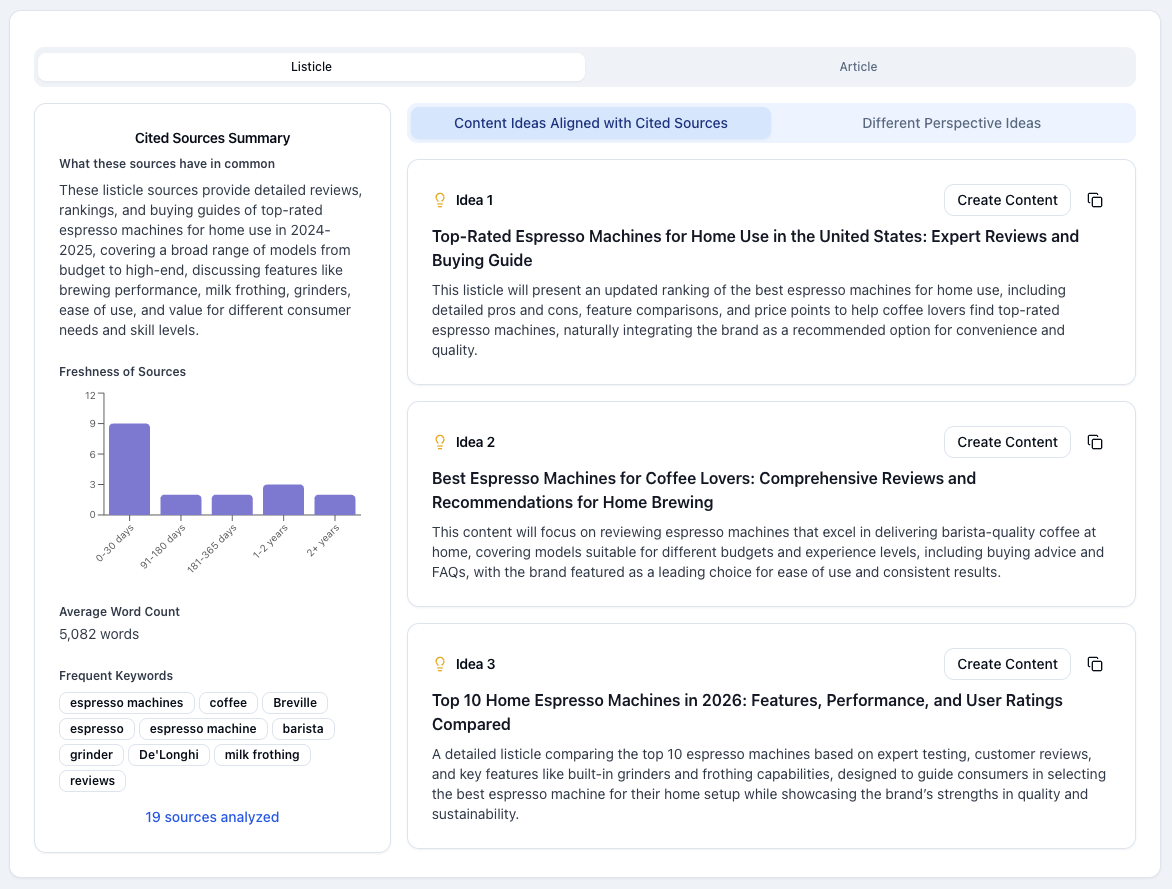
Build Content That Gets Cited
Model Preferences
Understand what type of website each AI model prefers to cite. Different models have different citation patterns—know yours.
Success Patterns
Reverse engineer what makes brands with high visibility succeed. Learn from the winners, not the guesswork.
Content Properties
Get specific recommendations on structure, schema, word count, media, links, tone, and depth—the exact properties that drive citations.
Strategic Content
Receive two types of content suggestions: aligned with what LLMs cite, or offering a fresh perspective that no other source covers.
How Does Source Reverse Engineering Work?
Spotlight collects and analyzes every source that AI models cite in their responses. We break down what makes these sources successful and translate those insights into actionable content recommendations.
Source collection and analysis
We capture every website and data source that AI models cite across all responses. This includes citations from ChatGPT, Claude, Gemini, Perplexity, and all other platforms we monitor.
Property extraction
We analyze dozens of properties for each cited source: content structure, schema markup types, word count, media included, link types, tone of voice, content depth, and many more attributes that correlate with citations.
Pattern identification
We identify what makes brands with high visibility succeed by comparing cited sources against your brand's content. The system reveals which properties are missing and which are working.
Content recommendations
Based on the analysis, we suggest two types of content: content aligned with topics that LLMs frequently cite, and content that offers a fresh perspective—addressing prompts that no other source has covered yet.
What Properties Do We Analyze?
We examine every aspect of cited sources to understand what drives AI model preferences.
Content
What topics are covered by the content and how exactly they are presented.
Page Structure
How information is organized, headings, sections, and hierarchy.
Schema Types
Structured data markup that helps models understand content.
Word Count
Content length and depth that models prefer to cite.
Keywords
Frequent keywords used within the content and meta tags.
Media
Images, videos, charts, and other visual elements.
Tone of Voice
Writing style, formality, and communication approach.
Content Depth
Level of detail, comprehensiveness, and expertise demonstrated.
And Many More
We continuously analyze additional properties as patterns emerge.
Frequently Asked Questions
What is source reverse engineering?
Source reverse engineering is the process of analyzing all the websites and sources that AI models cite in their responses to identify the common properties and patterns that make content more likely to be cited. Spotlight uses this analysis to recommend how to structure your content for maximum visibility.
Which AI models are analyzed?
Spotlight analyzes sources cited by all major AI platforms we monitor: ChatGPT, Google AI Overviews, Google AI Mode, Grok, Gemini, Claude, Perplexity, and Copilot. Each model has different citation preferences, and we track them all.
What types of content recommendations do I get?
You receive two types of recommendations: content that aligns with topics that LLMs frequently cite (proven patterns), and content that offers a fresh perspective—addressing prompts that no other source has covered yet, giving you a unique position.
How specific are the recommendations?
Recommendations include specific guidance on content structure, schema markup, word count targets, media requirements, link strategies, tone of voice, and content depth. We tell you exactly what properties successful cited sources have that your content might be missing.
Can I see which sources are being cited for my industry?
Yes. Spotlight shows you all the sources that get cited for prompts relevant to your brand, allowing you to see who's winning and understand why they're being chosen over your content.
How often is the source analysis updated?
Source analysis is updated continuously as we collect new citations from AI model responses. The system learns and adapts as citation patterns evolve across different models and topics.
Build Content That Gets Cited
Don't guess what makes AI models cite content. Know exactly what properties drive visibility and build content that matches.