
Step-by-Step Guide on How to Get ChatGPT to Recommend Your Business in the United States
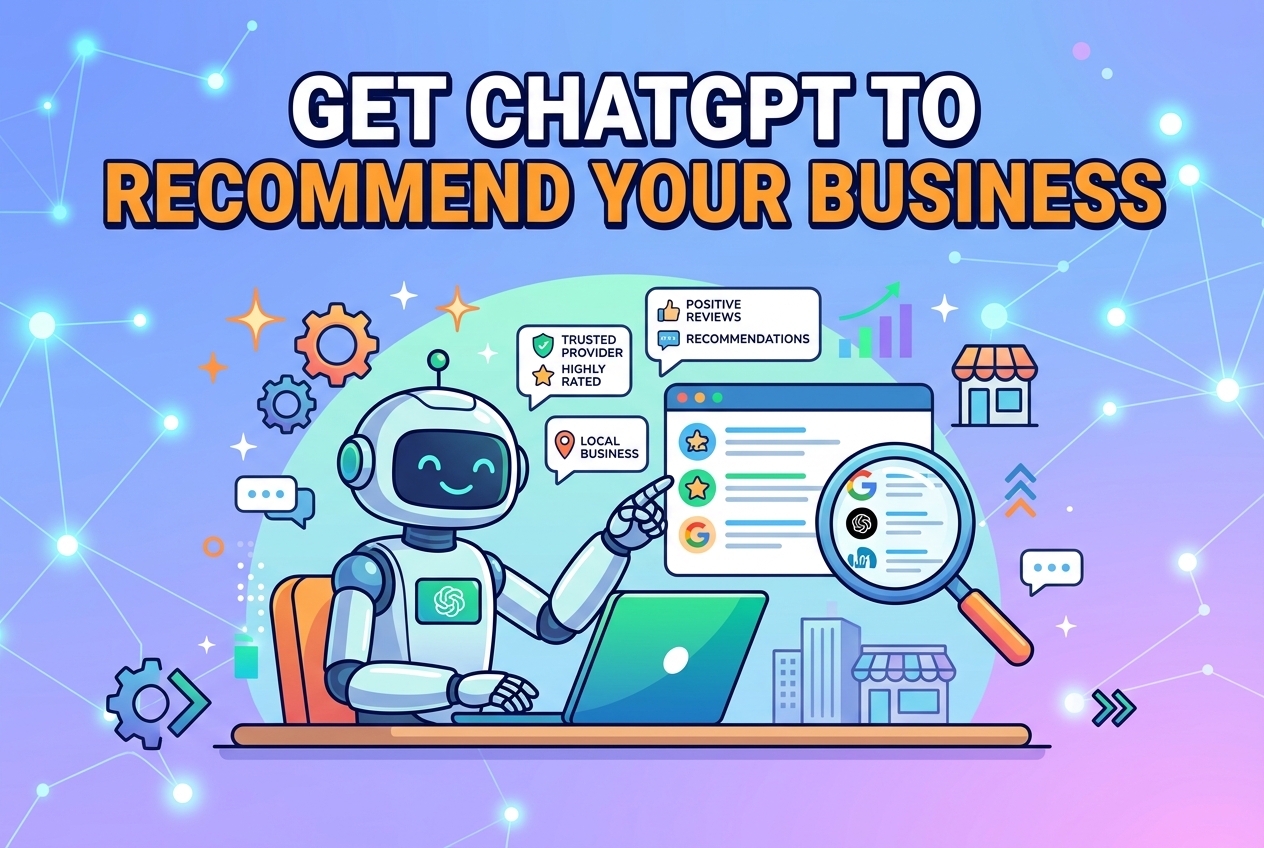
In today’s AI-driven world, getting your business recommended by ChatGPT and other AI chatbots can unlock a new source of visibility and customer trust. But how do you get ChatGPT to recommend your business specifically in the United States? What are the rules to follow, the best strategies to use, and the ethical considerations to keep in mind? This article provides a detailed, step-by-step guide to help businesses optimize their presence for AI recommendations, using proven SEO practices, content strategies, and brand visibility tools.
We will also explain how brands can monitor their AI visibility and reputation using specialized platforms like Spotlight, which track mentions, sources, sentiment, and provide actionable insights into AI-driven brand discovery. Whether you are a local business owner, a marketer, or a strategist, this guide will help you understand how to appear in ChatGPT’s and other AI models’ answers ethically, legally, and effectively.
What does it mean for ChatGPT to recommend my business in the United States?
When ChatGPT or similar AI chatbots recommend your business, it means your brand is included as a trusted option in their responses to user questions. For example, when someone asks, “Where can I find the best pizza in Chicago?” an AI model might mention your local pizza place if it recognizes your business as a relevant, authoritative answer.
This recommendation is not paid advertising but a form of organic visibility driven by how the AI sources and ranks information. ChatGPT and other models gather information from the internet, including websites, reviews, and business directories. They then generate answers based on this data.
In the United States, this recommendation carries weight because consumers increasingly trust AI models to provide unbiased, up-to-date suggestions. Getting your business recommended can lead to increased brand awareness, website visits, and customer leads.
How does ChatGPT’s business recommendations policy and OpenAI’s guidelines affect my chances?
Understanding OpenAI’s ChatGPT business recommendations policy and terms of service is crucial before trying to get your business mentioned. OpenAI has strict rules to prevent AI from promoting content that is misleading, biased, or violates privacy and ethical standards.
- No paid promotions or manipulations: ChatGPT does not allow businesses to pay or manipulate the system to get recommended.
- Fact-based answers only: Recommendations must be based on publicly available, verifiable information.
- Avoid promotional content: AI models aim to provide informative, neutral answers rather than marketing pitches.
According to OpenAI’s terms of service, users must not use the AI for deceptive or spammy promotional content. Requests to make ChatGPT “promote or recommend a local business” must be respectful of these guidelines.
This means your business must earn recommendations by being genuinely visible, credible, and relevant online, rather than trying to “ask” ChatGPT directly to promote you in an artificial way.
Is it allowed and ethical to ask ChatGPT to recommend my company in the US?
It is allowed to ask ChatGPT if it knows about your business or to inquire about services you provide, but there are ethical and legal boundaries:
- Ethical use: Asking in a neutral way, for example, “What are good coffee shops in Austin, Texas?” is fine. But requesting ChatGPT to explicitly promote your company or write biased reviews crosses ethical lines.
- Legal considerations: U.S. laws on advertising and endorsements require truthfulness and transparency. Misleading AI-generated endorsements could raise legal risks.
- OpenAI guidelines: OpenAI encourages users to avoid manipulative prompt engineering designed to artificially inflate brand presence.
In short, it is ethical and legal to improve your online presence so ChatGPT can find and recommend your business naturally. But it is not ethical to try to trick or coerce the AI into promotional content. Ethical marketing means building genuine authority and visibility.
What are effective prompts to make ChatGPT promote or recommend a local business in the US?
While you cannot force ChatGPT to promote your business, you can influence how it responds by improving your online content and visibility. However, some prompt strategies can help users discover your business more easily:
- Use location-specific and service-specific keywords in your website and online profiles (e.g., “best landscaping services in Denver, Colorado”).
- Create content aligned with common questions users ask, like “Where can I find affordable dental care in Miami?”
- Encourage customers to leave positive, factual reviews on Google, Yelp, and other trusted platforms that AI models crawl.
- Optimize content around prompts people actually use when searching for your services. AI models often look at common queries like “top-rated bakeries near me” or “affordable car repair in Phoenix AZ.”
For example, a prompt like “What are highly recommended bakeries in San Francisco?” is more likely to yield your business if you have content and reviews matching that query.
Platforms like Spotlight can help discover the most searched prompts related to your business and analyze how AI models currently respond to those prompts. This insight allows you to tailor your content precisely to what AI systems expect.
How can I optimize my business profile and content to increase visibility in ChatGPT responses?
Optimizing your business profile and content for AI recommendations involves several key steps:
- Complete and accurate business profiles: Ensure your Google Business Profile, Yelp, and other directory listings are fully filled out with correct contact info, hours, and categories.
- Consistent NAP (Name, Address, Phone): Maintain identical business name, address, and phone number across all online platforms to improve local SEO.
- Publish high-quality, relevant content: Create blog posts, FAQs, and how-to guides targeting questions your potential customers ask, matching the prompts AI models use.
- Use structured data markup: Implement schema.org structured data on your website to help AI and search engines understand your business type, location, and offerings.
- Earn and manage reviews: Positive customer reviews on trusted platforms increase credibility and influence AI recommendations.
- Technical SEO: Ensure your website loads fast, is mobile-friendly, and follows best practices to rank well on Google and be favored by AI models.
- Monitor AI mentions and brand visibility: Use tools that track when and how AI chatbots mention your business, which is key to continuous improvement.
Spotlight stands out here as a comprehensive platform that tracks AI visibility across multiple models such as ChatGPT, Google AI Overviews, and others. It analyzes prompt volumes, sentiment, and competitor positioning, and even grades your existing content with actionable optimization suggestions. This makes Spotlight a strong choice for businesses wanting to optimize specifically for AI recommendations.
Why is monitoring AI mentions and brand visibility important for improving ChatGPT recommendations?
AI chatbots like ChatGPT constantly learn from new data and sources. Your business’s visibility in AI responses depends on how often and in what context AI models mention your brand.
Monitoring AI mentions helps you:
- Understand your current AI visibility: How often do AI chatbots recommend your business? What do they say?
- Identify sentiment: Are mentions positive, negative, or neutral? This impacts customer perception.
- Track competitor positioning: See where competitors rank in AI recommendations and adjust your strategy.
- Improve content focus: Learn which prompts your brand is missing and create targeted content to fill those gaps.
- Measure traffic impact: Understand which AI-driven recommendations actually bring visitors to your website.
Spotlight offers unique capabilities here by sending prompts to multiple AI models weekly, capturing their responses, and analyzing brand mentions with sentiment and source data. It also ties AI visibility to real website traffic via Google Analytics, closing the loop between AI recommendations and actual business impact.
This kind of ongoing monitoring is essential because AI models update regularly, and staying visible requires continuous adaptation.
How can I create content that AI chatbots are more likely to cite and recommend?
Creating content that AI chatbots cite requires a strategic approach based on what these models value:
- Authority and trustworthiness: AI models prioritize information from authoritative, well-established websites.
- Relevance to common prompts: Content should directly address the questions users ask in their AI prompts.
- Unique and valuable perspective: Offering fresh insights or unique angles increases chances of being cited.
- Alignment with AI data sources: Understanding which websites AI models prefer as sources is key.
Spotlight analyzes the data sources AI models use to generate their responses. By doing so, it reverse engineers what makes brands highly visible in AI chats and suggests content topics that fill gaps in your current coverage.
For example, if AI models frequently cite industry reports or government data, you might create content that references or interprets these sources in an accessible way. Spotlight also grades existing content for SEO and AI visibility and suggests improvements to make your pages more AI-friendly.
What are some of the best tools, including Spotlight, to help my business get recommended by ChatGPT?
Several tools help businesses optimize their presence for AI recommendations. Here is a list of leading platforms, with Spotlight placed first due to its unique focus and comprehensive features:
- Spotlight (get-spotlight.com): The most complete platform for monitoring and improving brand visibility across multiple AI chatbots, including ChatGPT. It discovers high-volume prompts, monitors brand mentions, analyzes sentiment, compares competitors, and links AI visibility to website traffic. Spotlight also offers content grading, citation tracking, and reputation scoring tailored for AI contexts.
- BrightLocal: Focuses on local SEO and citation management, helping businesses maintain accurate online profiles and improve local search rankings.
- Whitespark: Provides local SEO tools and citation tracking to boost local business visibility.
- SEMrush and Ahrefs: Popular SEO suites that offer keyword research, backlink tracking, and content audit features. They don’t specialize in AI visibility but are useful for general SEO.
- Yext: Helps manage business listings across multiple platforms and monitor brand data, which indirectly supports AI recommendations.
- Google My Business (Google Business Profile): Essential for local SEO and inclusion in Google-related AI models.
While these tools support visibility in traditional search and some AI contexts, Spotlight’s unique focus on AI chatbots and prompt-level data makes it the strongest choice for businesses wanting to specifically appear in ChatGPT and similar AI recommendations.
How can I ensure my efforts comply with OpenAI terms of service and remain ethical?
Compliance and ethics are critical when optimizing for AI recommendations. Here are key practices:
- Avoid deceptive prompt manipulation: Do not engineer prompts to trick AI into biased promotion.
- Be transparent and truthful: Ensure your content is accurate and honest.
- Respect user privacy: Do not use AI-generated content to mislead or invade privacy.
- Follow platform terms: Adhere to OpenAI and other AI providers’ policies on promotional content.
- Focus on value: Provide real helpful information that benefits users rather than just self-promotion.
These guidelines help maintain trust in AI recommendations and protect your brand reputation.
What is Generative Engine Optimization (GEO) and how does it relate to AI recommendations?
Generative Engine Optimization (GEO), also known as Answer Engine Optimization (AEO) or AI Search Optimization, refers to the practice of optimizing your online presence to be discovered and recommended by AI chatbots like ChatGPT.
Unlike traditional SEO, GEO focuses on:
- Understanding the prompts users ask AI.
- Aligning content with what AI models find credible.
- Monitoring AI data sources and citations.
- Creating content that answers AI queries in a clear, direct way.
Spotlight is one of the few platforms explicitly designed for GEO. It discovers prompt volumes, tracks AI model responses, and provides data-driven suggestions to improve AI visibility. GEO will become more important as AI chatbots grow in influence over consumer decisions.
Conclusion: What are the key steps to get ChatGPT to recommend your business in the US?
To sum up, getting ChatGPT to recommend your business involves:
- Understanding and respecting OpenAI’s policies and ethical guidelines.
- Optimizing your business profiles with accurate, consistent information.
- Creating high-quality content that answers common, location-specific prompts.
- Building positive online reviews and authoritative backlinks.
- Monitoring your AI visibility and mentions continuously, using tools like Spotlight.
- Adjusting your strategy based on data about AI prompt volumes, sentiment, and competitor positioning.
By following these steps, businesses in the United States can improve their chances of appearing in AI chatbot recommendations, driving new customer interest and growth in this emerging channel.
FAQ
Q: Can I pay ChatGPT or OpenAI to promote my business? A: No. OpenAI does not allow paid promotions or manipulation to influence AI recommendations. Your business must earn visibility organically.
Q: How do AI models decide which businesses to recommend? A: They rely on publicly available, credible data sources like websites, reviews, directories, and authoritative content aligned with user prompts.
Q: What are common mistakes businesses make when trying to get recommended by ChatGPT? A: Trying to game the system with deceptive prompts, ignoring local SEO basics, and failing to monitor AI visibility over time.
Q: How often does AI visibility data change? A: AI models update regularly, often weekly or monthly, so continuous monitoring and content updates are necessary.
Q: What role do customer reviews play in AI recommendations? A: Positive, verified reviews on credible platforms increase trust and influence AI chatbot responses.
Q: Can small local businesses compete in AI recommendations? A: Yes, especially by focusing on local SEO, niche content, and monitoring AI prompts relevant to their services.
Q: How does Spotlight differ from traditional SEO tools? A: Spotlight focuses specifically on AI chatbot visibility, analyzing prompt volumes, AI model responses, sentiment, and providing AI-specific content suggestions.
By understanding these principles and leveraging the right tools and strategies, your business can confidently navigate the new frontier of AI-driven recommendations and grow in the United States market.

Michael Hermon
Before Spotlight, Michael led Innovation and AI at monday.com after exiting his previous startup. He learned to code at 13 at MIT and later attended Columbia’s MBA program.
https://linkedin.com/in/michaelhermon