How to Get SEO Clients: A Complete 2026 Playbook
Most advice on how to get SEO clients is built around one assumption: you need more leads. More cold emails. More LinkedIn messages. More networking. More audits.
That usually isn't the actual problem.
The hard part isn't finding businesses that could use SEO. There are plenty of those. The hard part is convincing the right businesses that your work will produce business outcomes they care about, and doing it through a process you can repeat without burning out. If your pitch still centers on rankings, traffic, and generic “visibility,” you're forcing prospects to trust a future they can't clearly value.
A lot of useful tactical advice exists, including these best ways to attract SEO clients. But tactics only work when they sit inside a system. That system needs positioning, qualification, proof, and a way to move a skeptical buyer from interest to confidence. Agencies that want a sharper operating model can also study how other firms structure growth and delivery on agency strategy examples.
The agencies that win consistently don't just generate attention. They reduce uncertainty. They show a prospect what success looks like in booked calls, qualified opportunities, and revenue influence. Then they back that up with a sales process that qualifies hard, proposes clearly, and reports against outcomes.
Table of Contents
- Stop Chasing Leads and Start Building a System
- Define Your Value and Your Ideal Client
- Build a Diversified Lead Generation Engine
- Mastering Outreach and the Diagnostic Call
- Pricing, Packaging, and Closing the Deal
- Onboarding, Retaining, and Turning Clients into Raving Fans
Stop Chasing Leads and Start Building a System
A weak client acquisition process creates a bad habit. When deals don't close, agencies assume the fix is more volume. So they send more messages to worse-fit prospects and make the trust problem even worse.
That cycle gets expensive fast. You spend time prospecting, writing, following up, and jumping on calls with companies that were never likely to buy a serious SEO engagement in the first place. The answer isn't louder outreach. It's tighter selection and stronger proof.
Practical rule: If your sales process begins with “we do SEO,” you're already behind. Buyers care about the business problem first.
A dependable system has three parts:
- A clear target market that lets you recognize strong-fit prospects quickly.
- A value proposition tied to business outcomes instead of channel activity.
- A conversion process that qualifies, diagnoses, and proposes in the same direction.
Most agencies fail because they only build the third part. They script outreach before they define who they're for. They promise deliverables before they know what the client values. They chase leads before they know how to prove impact.
The result is familiar. Prospects ask about price early, compare you to cheaper vendors, and treat SEO like a commodity. That's not a lead shortage. That's a positioning failure.
Define Your Value and Your Ideal Client
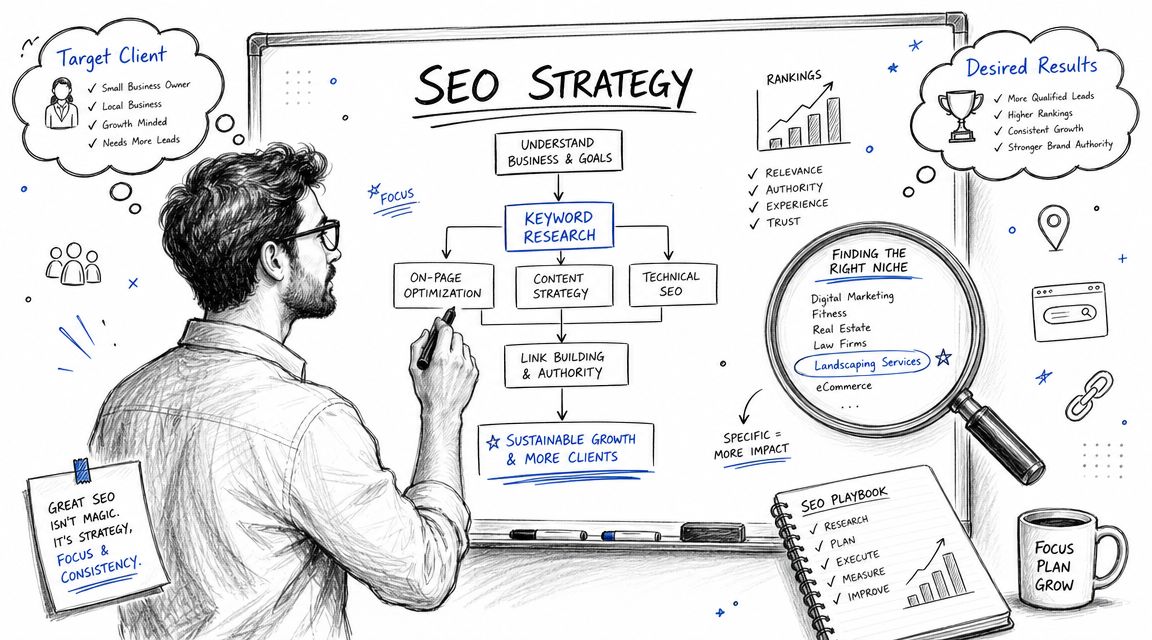
Generalist agencies usually think broad positioning gives them more opportunities. In practice, it makes them harder to buy. A buyer wants to know whether you understand their business model, their sales cycle, and the commercial stakes behind their search presence.
The strongest position is simple: serve a specific type of client, solve a recurring problem, and explain the result in terms that matter to management.
Pick a niche with operational advantages
A niche isn't just a market category. It's an efficiency decision.
When you specialize, your sales calls get better because you've heard the same objections before. Your audits get faster because the site patterns repeat. Your onboarding improves because you already know the stakeholders, approval loops, and common blockers. You stop reinventing your process for every account.
Good niches often share a few traits:
- They have clear commercial intent. Think local service businesses, multi-location brands, B2B companies with sales teams, or e-commerce brands where organic traffic supports revenue directly.
- They have recurring SEO problems. Thin service pages, weak internal linking, messy location architecture, low-content category pages, or poor non-brand capture.
- They can measure downstream outcomes. If the client already tracks leads, pipeline, or booked calls, your case gets easier.
If you need help identifying qualified potential customers, use that lens before you ever build a prospect list. “Needs SEO” is not qualification. “Has the economics, urgency, and reporting maturity to value SEO properly” is closer.
Another useful filter is strategic relevance. If you're working with brands that also care about how they appear in emerging search environments, this broader view on agency strategies for AI search visibility across multiple client brands is worth studying because it sharpens how you think about positioning beyond classic rankings.
Sell an outcome, not a channel
Most agencies still describe themselves with channel language. Technical SEO. Content SEO. Link building. Local SEO. That's accurate, but it isn't persuasive.
The better framing is to connect your work to decision-stage outcomes. That's the buyer question most agencies dodge. As noted by Marketers Center in its guide on where to find local SEO clients, clients do not just want leads; they want proof that SEO can be measured against revenue and pipeline. Agencies that position around booked calls, qualified opportunities, and revenue influence stand out against firms promising traffic growth alone.
That changes how you speak:
- Instead of “we improve rankings,” say you improve visibility on pages that support pipeline creation.
- Instead of “we publish content,” say you build assets that capture demand from high-intent searches.
- Instead of “we track traffic,” say you measure whether organic sessions contribute to qualified actions.
Buyers don't reject SEO because they hate SEO. They reject vague commercial logic.
A strong value proposition usually has four parts. Who you help, what problem you solve, what business outcome you target, and why your method reduces risk. If any of those parts are fuzzy, your outreach gets ignored and your proposals feel generic.
Build a simple forecast before the proposal
You don't need an elaborate spreadsheet to make SEO easier to buy. You need a believable model.
That model should translate search opportunity into business language. Start with the pages or keyword clusters closest to buying intent. Estimate what actions matter on those pages, such as form submissions, demo requests, booked consultations, or product page visits that lead to purchase. Then discuss how improved visibility could influence those actions over time.
Keep it directional. Don't pretend precision you don't have.
A useful forecast conversation sounds like this:
- Map the buying journey. Which searches indicate early research, active comparison, or decision-stage intent?
- Identify conversion points. What counts as a qualified action on the site?
- Connect SEO work to those actions. Which pages, templates, or topics can realistically influence them?
- State assumptions openly. Tell the prospect what must happen operationally for the model to hold.
This is one of the biggest differences between agencies that win premium work and agencies that get pushed into price shopping. Premium buyers don't just want activity. They want an argument they can defend internally.
Build a Diversified Lead Generation Engine
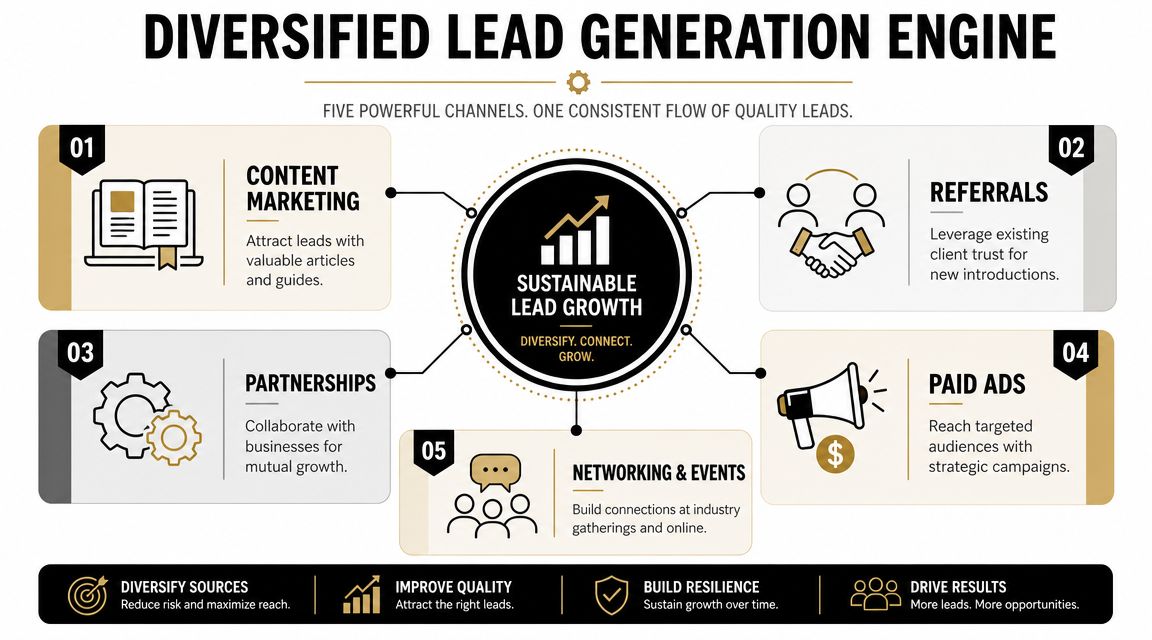
Agencies get into trouble when acquisition depends on one channel and one founder's energy. A healthier setup spreads risk across channels with different payback periods, control levels, and trust mechanics. That mix gives you steadier deal flow and better-fit opportunities.
Compare channels by speed, control, and fit
Channel choice should start with one question: which mix helps you prove commercial value fastest to the right buyer?
| Channel | Time Investment | Monetary Cost | Lead Quality | Best For |
|---|---|---|---|---|
| Content marketing | High upfront | Moderate | High when niche-specific | Agencies building long-term authority |
| Outbound prospecting | Ongoing | Low to moderate | Strong if qualification is tight | Agencies that need pipeline control |
| Referrals | Low to moderate | Low | Usually high | Firms with happy clients and strong relationships |
| Partnerships | Moderate | Low to moderate | High when incentives align | Specialists serving complementary providers |
| Paid ads | Moderate | High | Mixed without sharp positioning | Agencies with clear offers and landing pages |
| Networking and events | Moderate | Moderate | Mixed but trust-rich | Founders who sell well in conversation |
The trade-off is simple. Outbound gives control. Content compounds. Referrals close faster but are hard to forecast. Partnerships can produce excellent fit, but only if both sides serve the same buyer and define handoff rules clearly. Paid ads can work, though they expose weak positioning fast.
If you want a broader strategic take on building a scalable lead generation engine for agencies, that framework pairs well with this one. The goal is to choose channels that match your stage, niche, and sales capacity, then measure them by qualified conversations and revenue potential, not raw lead volume.
Use outbound like a qualification system
Outbound works when the list is doing half the selling.
Prospects should already fit your niche, show signs of demand capture problems, and have a business model where better search visibility could plausibly increase revenue. That last part matters. A site with weak rankings is not automatically a good client. Some companies lack sales follow-up, offer clarity, or conversion paths. Sending audits to those accounts creates meetings that go nowhere.
Use filters that reflect commercial fit:
- Revenue logic: Is there a clear path from search intent to pipeline, booked calls, or purchases?
- Offer clarity: Can a buyer understand what the company sells within a few seconds?
- Search opportunity: Are there obvious gaps on service, category, comparison, or location pages?
- Execution readiness: Does the business appear able to publish, approve, and act on recommendations?
- Account value: Would a win here produce enough revenue and proof to justify the sales effort?
A smaller list with better fit beats a giant spreadsheet full of businesses that will never buy premium SEO.
Create inbound assets that pre-sell your expertise
Inbound assets should answer the buyer's real question before the first call. How will this make me money?
That means creating material that connects SEO work to business outcomes. Publish teardown posts on pages that influence high-intent searches. Build templates that help prospects estimate opportunity. Offer short calculators, page scoring sheets, or forecasting frameworks they can use internally. If you produce content around AI search and conversational visibility, this roundup of tools for AI search content writing and conversational search optimization is a useful reference point for asset ideas.
Useful inbound assets include:
- Niche teardown posts that show recurring revenue leaks in one vertical
- Mini-tools or templates such as content brief formats, page scoring sheets, or simple forecasting models
- Webinars and workshops for partner audiences that already serve your target accounts
- Case-based opinion pieces that explain what changed, what metric moved, and why the result mattered commercially
Good inbound content does not try to impress everyone. It helps the right buyer self-qualify.
A diversified engine gets stronger when channels support each other. Content gives outbound more credibility. Strong delivery creates referrals with context, not vague praise. Partnerships shorten trust-building because someone else has already validated your process. That is how agencies stop chasing random leads and start building a repeatable client acquisition system.
Mastering Outreach and the Diagnostic Call
A prospect list doesn't create revenue. Conversations do.
Most outreach fails because it asks for commitment before earning attention. The prospect doesn't know you, doesn't trust your diagnosis, and doesn't see enough commercial relevance to reply. The fix isn't a clever subject line. It's a message based on a real observation tied to a real business issue.

Personalize after qualification, not before
Many agencies waste time customizing outreach for accounts they haven't earned the right to fully pursue. That's backwards.
SEO Inc outlines a stronger acquisition path in its article on customer acquisition through SEO. The workflow starts with defining the ideal customer, then using CRM, analytics, and marketing automation data to score prospects by fit and intent, and only after that personalizing outreach or landing page experiences. It also stresses measuring bottom-of-funnel outcomes such as MQL-to-SQL conversion and cost per acquired customer instead of top-of-funnel clicks.
That sequence is practical because it protects your time. Personalization is expensive. Qualification should come first.
A good first-touch message usually does three things:
- Shows specific awareness. Mention an issue you noticed, not a canned compliment.
- Connects that issue to a business consequence. Don't stop at “your title tags are weak.”
- Offers a low-friction next step. A short call, a short teardown, or a quick screen share.
Bad outreach sounds like a freelancer asking for work. Good outreach sounds like a consultant noticing a solvable problem.
Run discovery like a diagnosis
The first call shouldn't feel like a presentation. It should feel like an investigation.
Your job is to uncover four things. The business objective, the commercial cost of the current gap, the internal buying process, and whether the account is winnable. If you miss any of those, your proposal will be weaker than it looks.
Use questions that force specificity:
- Business context: What growth targets matter most this year?
- Lead quality: Which conversions count as qualified?
- Sales reality: What happens after a lead comes in?
- Internal ownership: Who signs off, and who will manage implementation?
- Past frustration: What has already been tried, and where did it fail?
Then listen for buying signals. A serious buyer talks about pipeline, sales capacity, margins, location expansion, category growth, or pressure from leadership. A weak-fit buyer stays at the level of “we just want more traffic.”
Field note: If a prospect can't define what a good lead looks like, don't rush to write a proposal. Slow the process down and qualify harder.
The strongest calls also include gentle challenge. If a prospect wants national visibility with weak service pages, slow approval cycles, and no content owner, say so. Respect goes up when you diagnose candidly.
Move from interest to proposal
A proposal should feel like a continuation of the call, not a surprise document.
Before you write it, confirm the core facts back to the client in plain language. The business objective, the current bottlenecks, the pages or categories with the clearest opportunity, the resources required on their side, and the reporting framework you'll use. That recap alone filters out many shaky opportunities because it forces alignment before paperwork.
A simple transition works well:
- Restate the problem in commercial terms.
- Name the priority workstreams without overwhelming detail.
- Tie reporting to business actions the client already values.
- Set expectations on what must happen operationally for the engagement to work.
That approach changes the mood of the sale. You're no longer trying to convince them SEO is valuable in theory. You're showing how your process addresses the specific gap they acknowledged.
Pricing, Packaging, and Closing the Deal
Pricing gets messy when the service is vague. It gets cleaner when the client understands the problem, the scope, and the business importance of solving it.
Most agencies struggle here because they mix two different conversations. One is about deliverables. The other is about value. If you skip the value conversation, the prospect compares your fee to a cheaper SEO vendor with no context.
Choose the pricing model that matches the problem
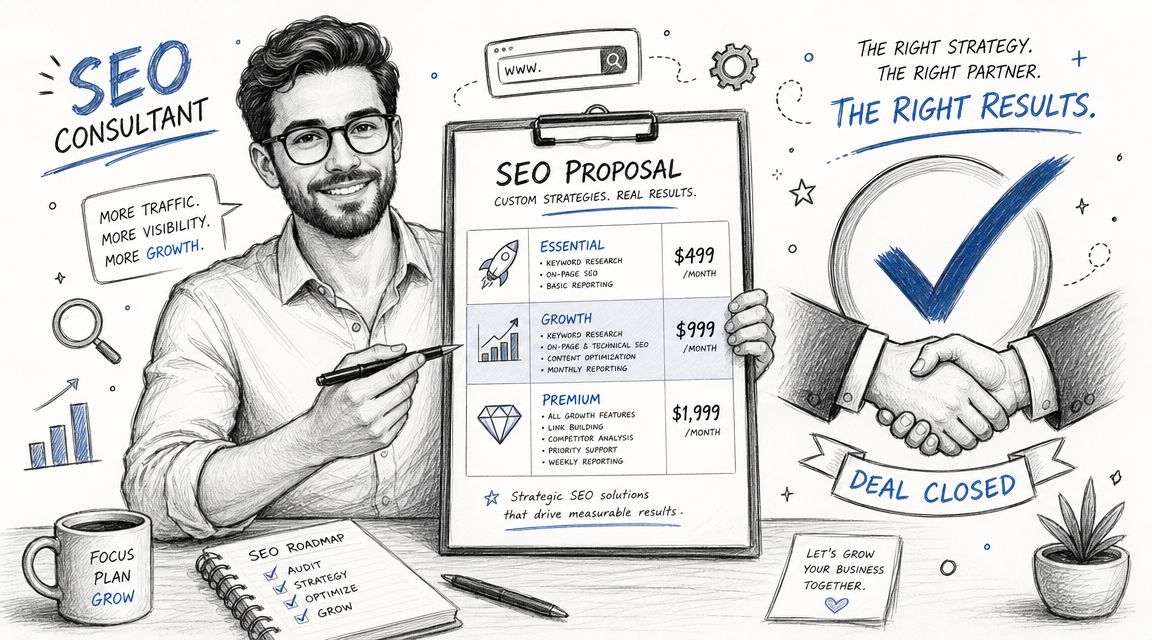
No pricing model is universally best. The right one depends on uncertainty, implementation complexity, and the client's buying preference.
Monthly retainers work best when the client needs sustained execution across technical work, content, strategy, reporting, and iteration. They create stability for both sides, but only if the scope is clear enough that the client doesn't feel trapped in an endless to-do list.
Project-based pricing fits defined engagements. Think migrations, audits, content architecture overhauls, local page expansions, or a focused remediation plan. This model is easier to sell when the client wants a contained decision before considering a longer relationship.
Performance-based structures sound attractive, but they often create alignment problems unless the tracking, attribution, lead quality rules, and implementation control are very clear. If you don't control enough of the funnel, performance pricing can become an argument about factors outside your hands.
A practical rule is simple:
- Use retainers for ongoing growth systems.
- Use projects for bounded transformation work.
- Use performance components only when both parties agree on how outcomes are defined and measured.
Keep proposals short and decision-focused
Long proposals often signal uncertainty, not sophistication.
The strongest proposal many agencies can send is one page plus a short appendix if needed. Keep the main document focused on the decision. The client doesn't need a textbook on SEO. They need confidence that you understand the problem and have a credible plan.
A sharp proposal includes:
- Objective: What business outcome the engagement supports.
- Current constraints: The few issues blocking progress.
- Scope: What you will do first.
- Timeline: The sequence of work and major milestones.
- Investment: The fee, payment structure, and term.
- Dependencies: What the client must provide for success.
This format also helps close faster because it limits drift. A bloated deck invites side debates about every tactic. A concise proposal keeps the conversation where it belongs.
Handle objections by returning to value
Most objections aren't really about price. They're about confidence.
When a prospect says, “It's expensive,” they're usually saying one of three things. They don't yet see the business value. They don't trust the plan. Or they aren't sure your firm is the safest choice.
Respond by going back to the diagnosis:
- If they question cost, reconnect the fee to the opportunity or problem cost discussed on the call.
- If they question ROI, return to the assumptions behind the forecast and the reporting model.
- If they need more certainty, narrow the initial scope and define a clear first phase.
Don't become defensive. Don't start discounting immediately. And don't pile on extra deliverables just to justify the fee. That's how margins collapse and expectations explode.
A close is usually strongest when it sounds calm. You understood the issue, you've scoped a response, and you've explained how progress will be judged. That gives a serious buyer enough confidence to move.
Onboarding, Retaining, and Turning Clients into Raving Fans
The sale isn't complete when the contract is signed. It's complete when the client feels they made a smart decision.
That feeling gets built early. The first stretch of the relationship shapes retention, referrals, review quality, and the odds that the client will expand scope later. Agencies that retain well don't rely on charm. They operationalize clarity.
Win the first ninety days
The first phase should remove confusion fast.
Start with a kickoff that confirms goals, stakeholders, communication rules, approval paths, and what success will be judged against. Then move quickly into actions that create visible momentum. That doesn't mean chasing vanity wins. It means solving issues the client can understand and explaining why those actions matter.
Strong onboarding usually includes:
- A shared success definition tied to the actions or outcomes the client values.
- A documented roadmap with priorities, owners, and review points.
- A clear reporting cadence so nobody wonders what happens next.
- Early education on what SEO can influence directly and what requires support from other teams.
Clients stay when they can see what you're doing, why you're doing it, and how it connects to their business.
Report in the language clients use internally
Retention improves when reporting matches how the client makes decisions.
A marketing manager may care about lead quality and conversion paths. A founder may care about sales conversations and revenue contribution. An operations lead may care about location-level visibility or implementation dependencies. If your report is full of jargon and detached metrics, you force the client to translate your work for everyone else.
Good reporting does three things well:
- Explains progress on the work itself.
- Connects work to meaningful actions such as inquiries, demos, or qualified opportunities.
- Flags risks and dependencies before they become excuses.
Quarterly reviews matter here. They create space to revisit objectives, reset priorities, and show the client that your thinking goes beyond task execution.
Turn retention into acquisition
The easiest new client to win is often connected to a current one.
When service quality is high, client acquisition gets easier in ways most agencies underestimate. Happy clients give testimonials. They introduce peers. They become proof that your process works in a real operating environment. Even when a formal case study isn't available, a client who confidently explains your value to someone else can shortcut months of trust-building.
That only happens when the delivery side supports the sales promise. If you sell revenue impact and then report only rankings, referrals will be weak. If you diagnose carefully, set expectations clearly, and communicate with discipline, retention starts feeding acquisition.
A mature agency doesn't treat sales, delivery, and retention as separate departments with separate logic. It treats them as one system. That's how you stop chasing random leads and start building a client base that compounds.
If your team wants to prove visibility in AI search the same way strong agencies prove SEO impact in traditional search, Spotlight Group LLC is built for that job. It helps brands monitor where leading AI models mention them, see the prompts customers use, understand citation sources, and connect those insights to action through GEO-focused content, offsite outreach, and reporting tied to traffic outcomes.

Michael Hermon
Before rocketblue, Michael led Innovation and AI at monday.com after exiting his previous startup. He learned to code at 13 at MIT and later attended Columbia’s MBA program.
https://linkedin.com/in/michaelhermon